

Hello Riddlers!
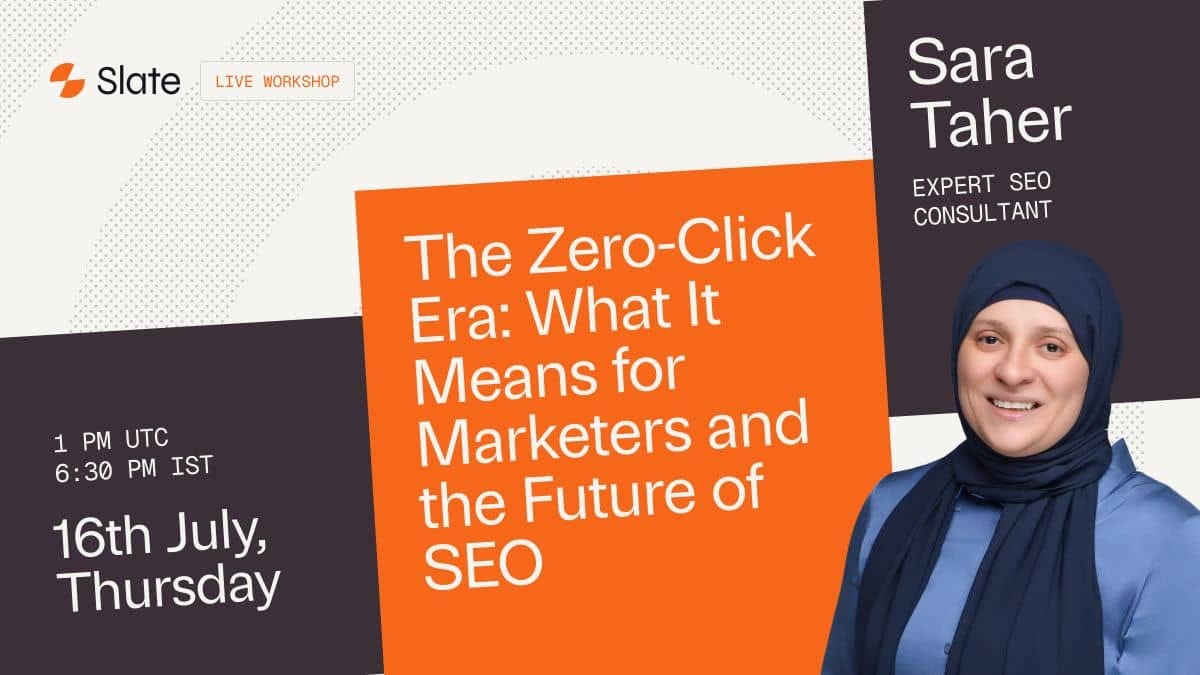
📌 Join my in my next webinar on Thursday July 16 · 1 PM UTC / 6:30 PM IST where I will be discussing how to navigate the zero click era. Sign up here.
Intro
Google is getting billions of searches every month, but we’re also learning that only 32% of all searches end with any type of click and of those, 66.6% go to the open web (non-google non PPC ads).
We’ve been blaming Google’s AI experiences, and rightfully so. Google, on the other hand, has been trying to soften the blow by saying websites are only losing low-quality clicks from users who would’ve bounced anyway. Just last year, Google’s Elizabeth Reid said AI Overviews drive “higher-quality clicks.”
This year, there’s a different story.
Perhaps more data is now available (like Google needs more data 😂) but Liz said in a recent interview that “the decline [of traffic to publishers] isn’t solely caused by AI Overviews, but rather by broader shifts in user behavior”
So I decided to analyze this statement.
Is it true? because if so, we maybe missing out on so much opportunity, and holding on to optimizing for the wrong type of content.
So buckle up!
As always, I'm going to build the case step by step before getting to my final conclusion.
Platformisation
A recent Reuters study has some very interesting findings.
When it comes to news consumption, the study found that “social media and video networks are, on average across the markets covered, more popular than both TV and owned news websites and apps as sources of news,” and that “people increasingly like to watch rather than read the news, often drawing on a wider range of sources and voices.”
And video content isn’t synonymous with YouTube.
The study shows that:
YouTube is used by 34% of people for news.
Instagram follows at 26% and continues to grow.
TikTok, while starting from a smaller base, is growing the fastest and is now used by 20% of people for news.
Facebook remains the largest platform overall for news consumption, with 43% of respondents using it, reversing recent declines.
But here’s another interesting question...
Who’s creating all this content?
Not necessarily large, trusted news organizations.
The study found that:
27% of respondents globally get some of their news from news-focused creators or influencers.
46% get some news from creators of any type.
Why?
Respondents said creators are more entertaining, easier to understand, and more relatable than traditional news outlets.
Ironically, those same respondents also believe creators are less trustworthy and less impartial.
So despite recognizing that creators are generally less trustworthy, people still choose to consume their content because it’s more engaging, easier to digest (likely because of simpler language), and more relatable.
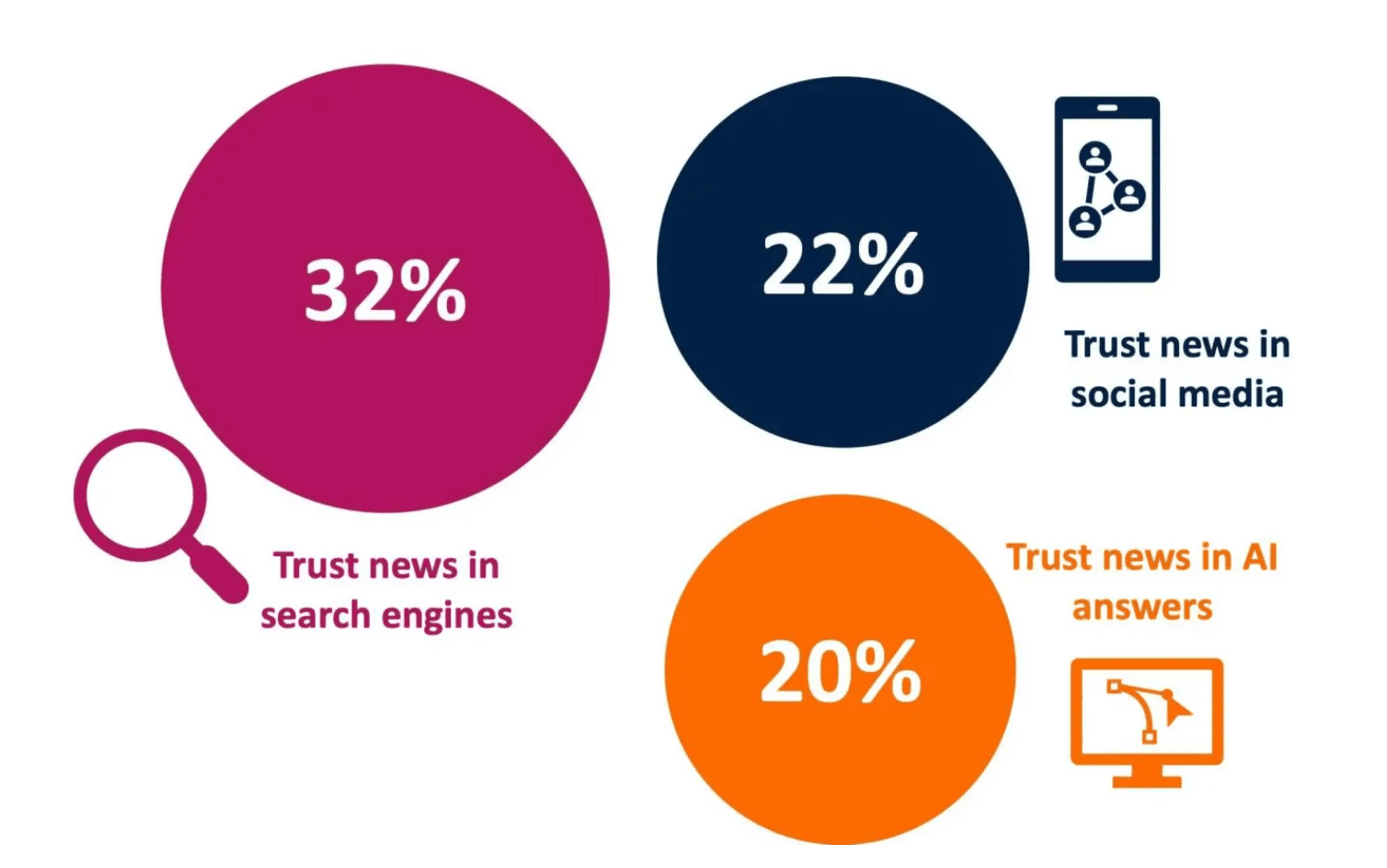
The following chart shows how trust varies across different news sources.
So... is traditional media dead?
Actually, no.
The study found that people are consuming these newer formats alongside traditional news rather than completely replacing them.
Another interesting finding is that more than half (52%) of respondents aged 18–24 now say that social media, video platforms, and AI chatbots are their primary way of getting news.
To me, this tells us three things.
First, user preferences are shifting toward consuming information on social media and video platforms rather than traditional text-based content that ranks in search.
Second, the age of your audience matters. Millennials—and especially Gen Z—are increasingly choosing these platforms as their preferred way to discover and consume information.
Third, people want to hear from people, not necessarily large brands.
Interesting Expertise Content
For so long, our focus has been on creating “helpful content.”
And naturally, helpful content is not always built to be entertaining.
But it seems that to be successful with your content strategy in 2026, and appeal to wider audiences, you need to think about the entertainment factor as well.
Now, Liz Reid didn’t say that exactly. What she said was:
“To the extent that you produce really interesting expertise content, we still see that people are interested in that.”
May I second that?
I’ve been seeing a lot of misinformation in our industry being amplified by the same voices over and over again. And somehow, those voices become very popular.
What’s interesting is that, almost every time I see this content being shared, because it’s entertaining. It’s funny, provocative, or creates a strong reaction.
And that’s the point: attention and trust are not always correlated.
So if your content is not getting the attention or user engagement it deserves, it may be missing that element.
I’m not suggesting you become a clown 🤡. I’m simply pointing out an observation, and it’s up to you to decide whether you want to adapt your content strategy.
But keep in mind: the more intellectually sophisticated your content and concepts are, the narrower your audience will naturally become. And you can be ok with that by the way.
This is not a new finding. It has always been the case.
However, it may be more visible than ever today because users have an endless number of sources competing for their attention.
Content Length
Liz is also arguing that:
"To the extent that you might just read an AI review and you wouldn’t click, you might have previously just read the headline and not clicked through… You were going to go spend 10 minutes reading the article, you’re probably not going to decide that an AI Overview is a substitute for the 10-minute article."
She attributes this to the fact that sometimes people just want a quick answer—a sports score, for example—and they were never going to read the full article anyway.
So, according to this argument, AI Overviews are not necessarily taking clicks away from publishers. People will still click when they want something beyond basic information: an in-depth analysis, a unique perspective, an opinion, or expert commentary.
Ok Liz, but here’s the thing...
AI Overviews can also summarize those unique viewpoints and opinionated analyses. So that argument isn’t necessarily a strong defense for Google either 😂
However, this does point us toward a bigger question.
At some point, we have to face reality.
And reality says: people are consuming less long-form content.
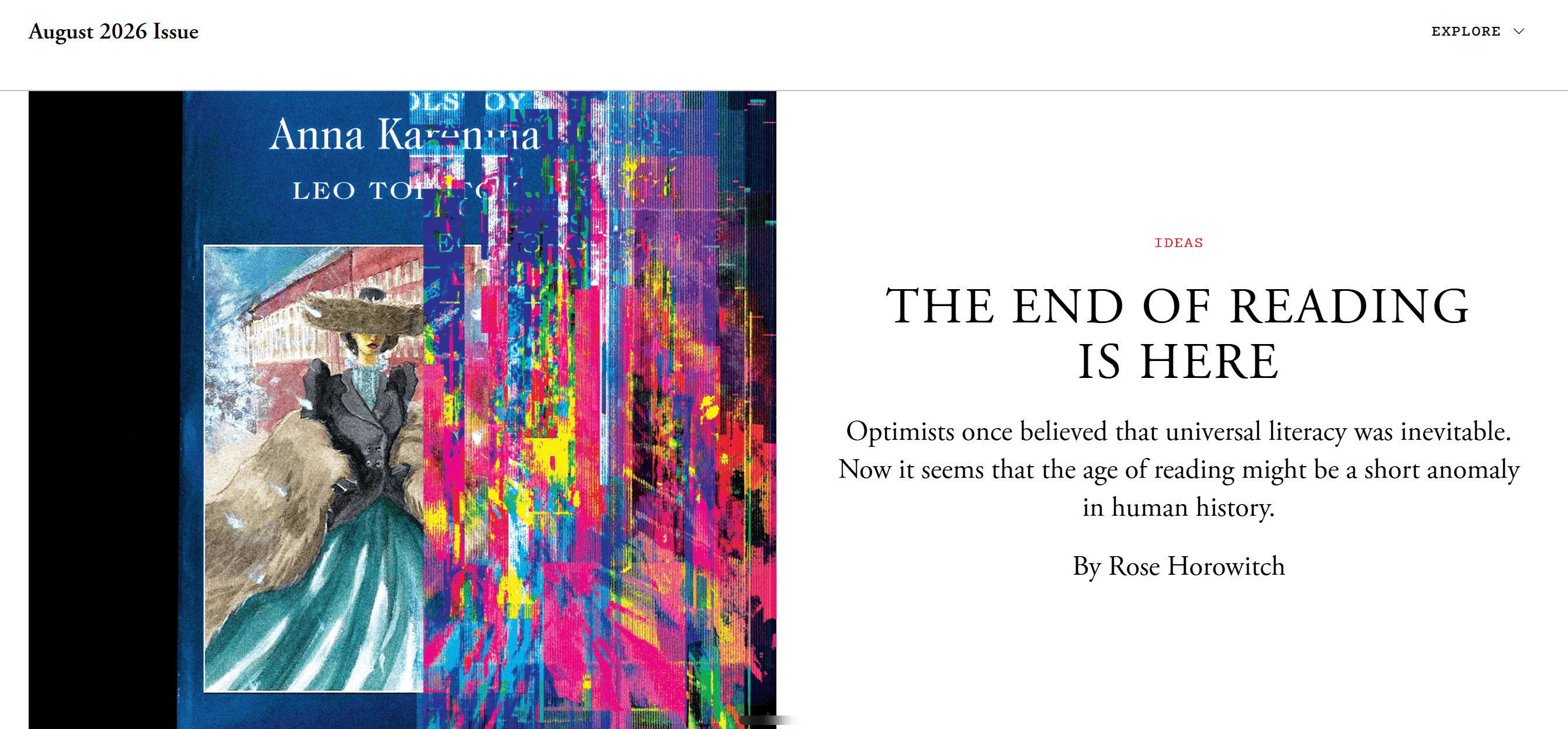
As dramatic as this title from The Atlantic sounds “The End of Reading Is Here”,it doesn’t feel entirely disconnected from what we’re seeing.
Research at the University of California, Irvine, highlights how our attention patterns have changed over time. By tracking digital activity, researchers found that the average time spent on a single screen before switching tasks dropped from around 150 seconds in 2004 to approximately 47 seconds today.
The reality is that people’s attention is becoming more fragmented. With constant notifications, infinite scrolling, and an endless supply of content competing for attention, users are increasingly looking for faster and easier ways to consume information.
That’s why short-form answers like AI Overviews, as well as alternative discovery platforms like social media and video networks, are becoming increasingly attractive for quick and passive information consumption.
AIO and Few More Things
Yes AIO is taking clicks away, but also we need to acknowledge that people are preferring video content, shorter content (a lot of the times), content from creators and social media, content that makes them smile or laugh 🤷♀️
That’s the reality of where we are today.
And while I will remain a strong supporter of long-form content, I don’t think the answer is to ignore these patterns.
My recommendation is to branch out.
Take the valuable insights, research, and expertise from your long-form content and repurpose it into different formats and distribute it across different platforms.
And That’s a Wrap (Almost 😄)
Next time someone asks where the clicks go (I asked Google ppl that in search central live 😄) I guess now you know the answer…. Google took a lot of it, users want different things, and we have not adjusted to this new era yet.
That’s that for today folks and see you in the next newsletter!
References
Reuters: Overview and key findings of the 2026 Digital News Report
In 2026, Less than One Third of Google Searches Still Send a Click
Support the Riddler!
Sign up for my newsletter if you’re not already.
Share the newsletter and invite your friends to signup. Help me reach 2k signups by end of 2025 please 🙂
Provide feedback on how I can make this newsletter better!!!
If you’re an SEO tool or an SEO service provider, consider sponsoring my newsletter. I’m also open to other partnership ideas as well.
Disclaimer: LLMs were used to assist in wording and phrasing this blog.