

If you find value in my newsletter and want to support the work that goes into it consider —> [☕Buy Me a Coffee☕]💡 Want more from me? [SEO Strategy Course] | [Build Your Own SEO Tools (with Python & Agentic AI)] | [Premium SEO Mastermind]
Alternatively you can become a paid subscriber
Intro
Creating good content is not easy for many reasons, one of them is that we don’t know what good content looks like 😄
For example, some SEO news comes out, my entire timeline is talking about the exact same thing… sometimes I just hold off… do I need to say something just because everyone is saying something? would that be good content really?
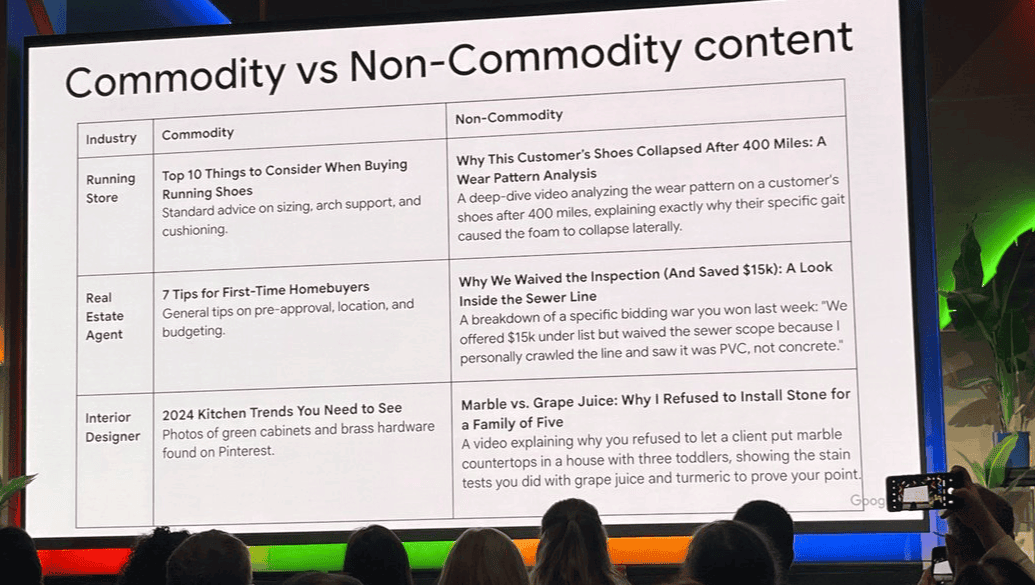
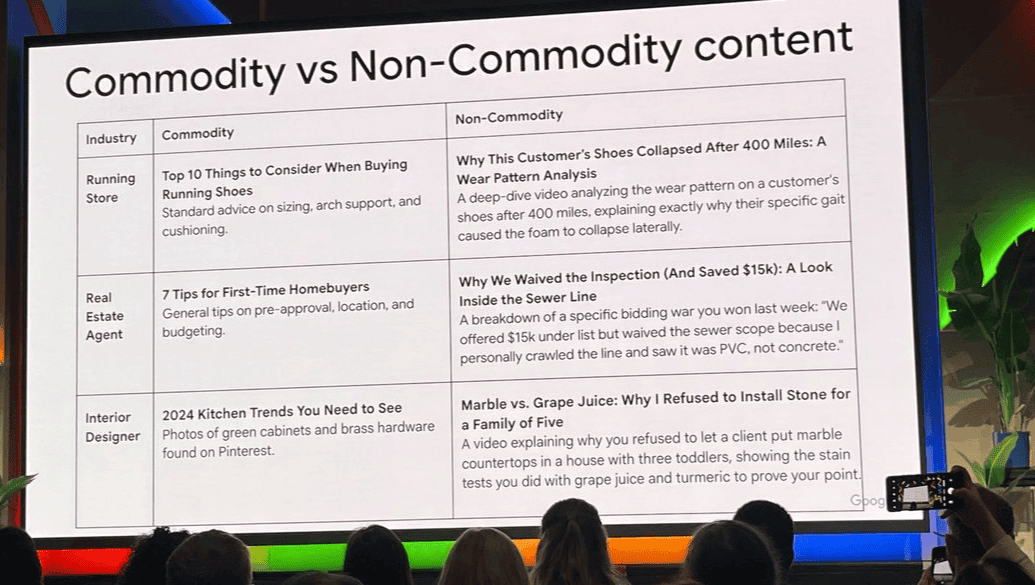
And honestly, Googlers have been trying to help clarify what is good content. Just earlier this year I attended Google Search Central Toronto, and out of this event came the famous slide shared by Danny Sullivan about commodity vs non-commodity content:
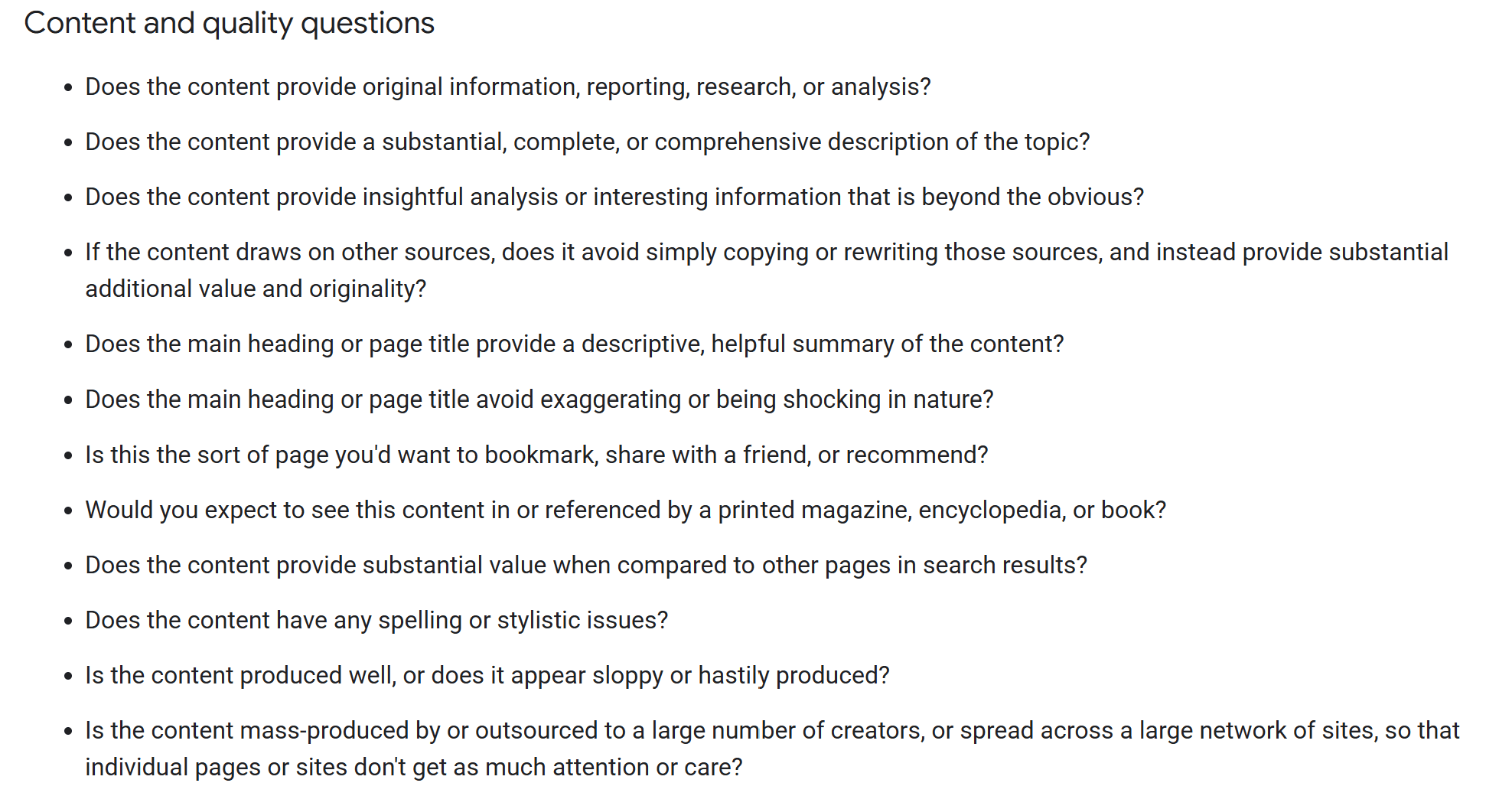
And there’s also this checklist from Google that you can use to measure the quality of your content:
But still, I feel something is missing. That’s why today I want to introduce you to a new concept… new in SEO but definitely not new in general:
Bloom’s Taxonomy
what’s that? read below!
What’s Bloom’s Taxonomy?
In simple words, Bloom’s Taxonomy is a way of organizing different levels of thinking and learning, from simple to more complex.
It’s used by teachers and educators, but we’re not going to dig too deep into it today.
So what does this have to do with content creation?
Well, there’s a quote by Paul Graham that I will probably quote for life (quote to quote... sorry 😄):
“Good writing is just good thinking.”
And I think this is where Bloom’s Taxonomy and the concept of organizing different levels of thinking, from simple to more complex, becomes interesting for content creators.
Understanding the level of thinking required for different types of writing can help us create better content.
You know what? Let’s not talk about Bloom’s Taxonomy.
Let’s see it in action.
The Cognitive Domain Pyramid
Bloom’s taxonomy defines six levels of thinking. We can use those levels to define our very own six levels of writing! Also note the triangle shape, it’s because level one of thinking is easy, so it is more common, same with content: if it’s easy to produce, there’s probably a lot of it out there.
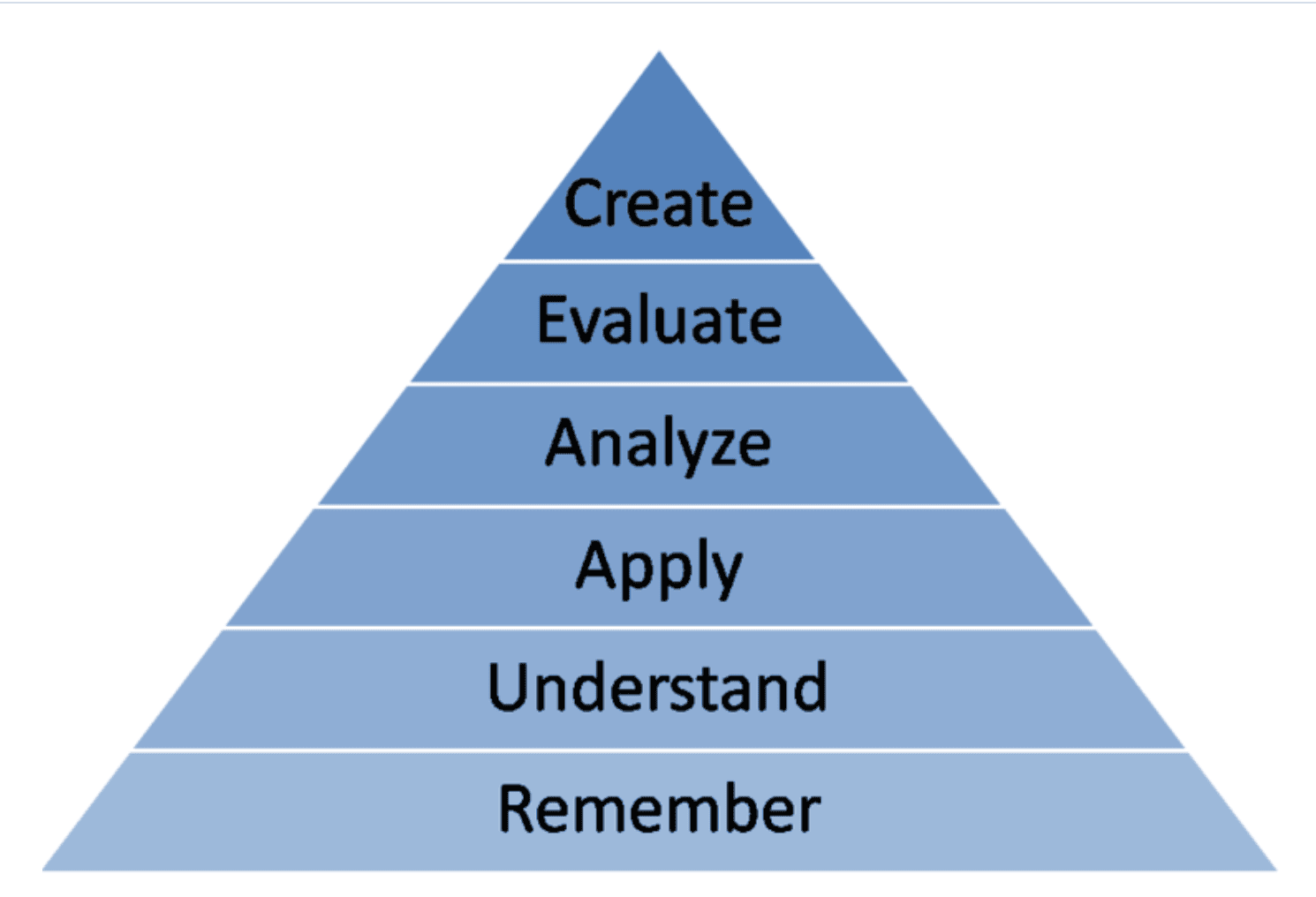
Level 1: Remember
If you’re writing at level 1, it’s basically recalling facts. You are retrieving established information whether from another source or from your own knowledge and writing about it.
I’d say this is similar to the skyscraper technique in SEO: you find what is already known, gather the information, and put it together in one place.
Example of writing at this level: “Meta descriptions are snippets that summarize the content of a webpage and can appear in search results.”
Level 2: Understand
If you’re writing at Level 2, you’re making sense of information you already know. You’re interpreting it, explaining it, comparing it, or translating it into a different way of thinking.
You’re not just repeating the fact. You’re showing that you understand what it means.
Example of writing at this level: “think of internal links like signposts on a highway: they help search engines discover and navigate between the different pages on your website.”
Level 3: Apply
If you’re writing at Level 3, you’re taking a concept, rule, method, or process you already know and using it in a new situation to solve a specific problem.
Example of writing at this level: "For this local plumber’s landing page, we can apply buyers journey principles by focusing the page on emergency plumbing services to attract conversions rather than writing a general article about plumbing."
Level 4: Analyze
If you’re writing at Level 4, you’re breaking something down into its parts and looking at how those parts relate to each other.
You’re not simply reporting what happened. You’re looking for patterns, relationships, differences, and possible reasons behind them.
Example of writing at this level: "This website lost traffic not because of AI Overviews. A YoY comparison shows a reduction in the number of pages and content created."
Level 5: Evaluate
If you’re writing at Level 5, you’re making a judgment based on data and specific criteria or standards.
This is where you move from “here’s what the data says” to “here’s what I think we should conclude from it, and why.”
Example of writing at this level: "Based on our latest Search Console data, our current content strategy is failing because, while overall traffic increased, the average clicks/page is still very low”
Level 6: Create
If you’re writing at Level 6, you’re combining knowledge, ideas, and information to produce something new.
This is the highest cognitive level, so it generally requires more original thinking and effort, which aligns with the content-effort measure Google uses to assess content quality.
Example of writing at this level: "After studying how LLMs retrieve and cite information, we built an interactive SEO tool that lets users analyze the sources behind an LLM answer."
Note: I asked chatgpt to assess this article and assign a bloom taxonomy level, here’s what it came back with:
There are elements of Understand, Apply, Analyze, and Evaluate throughout, but the overall intellectual work is synthesis: you took concepts from education, SEO, Google’s content guidance, and your own experience and combined them into a framework that didn’t previously exist in this form. That makes the article itself a strong Create-level piece, which is also a nice real-world example of the argument you’re making.
And That’s a Wrap (Almost 😄)
Ya so when writing content, it’s good to see what level of thinking you are putting into your content. Here’s a short summary that you can save somewhere to always assess yourself!
Remember: I know this.
Understand: I can explain this.
Apply: I can use this.
Analyze: I can break this down and find relationships.
Evaluate: I can make a judgment about this.
Create: I can use what I know to make something new.
I hope I gave you some inspiration on what is good content, you can also integrate this framework into your content automation workflows if you’re automating your content production.
That’s that for today folks and see you in the next newsletter!
Support the Riddler!
Sign up for my newsletter if you’re not already. (Pssst, you can also become a paid subscriber)
Share the newsletter and invite your friends to signup. Help me reach 2k signups by end of 2026 please 🙂
Provide feedback on how I can make this newsletter better!!!
If you’re an SEO tool or an SEO service provider, consider sponsoring my newsletter. I’m also open to other partnership ideas as well.
Disclaimer: LLMs were used to assist in wording and phrasing this blog.