

Hello Riddlers!
📌 📌 Your support keeps this newsletter FREE —> [☕Buy Me a Coffee☕]💡 Want more from me? [SEO Strategy Course] | [Build Your Own SEO Tools (with Python & Agentic AI)] | [Premium SEO Mastermind]
Warm Up
Since the Google I/O event a few weeks ago, my feed has been full of hot takes declaring “SEO is dead.”
Here’s one from TechCrunch:
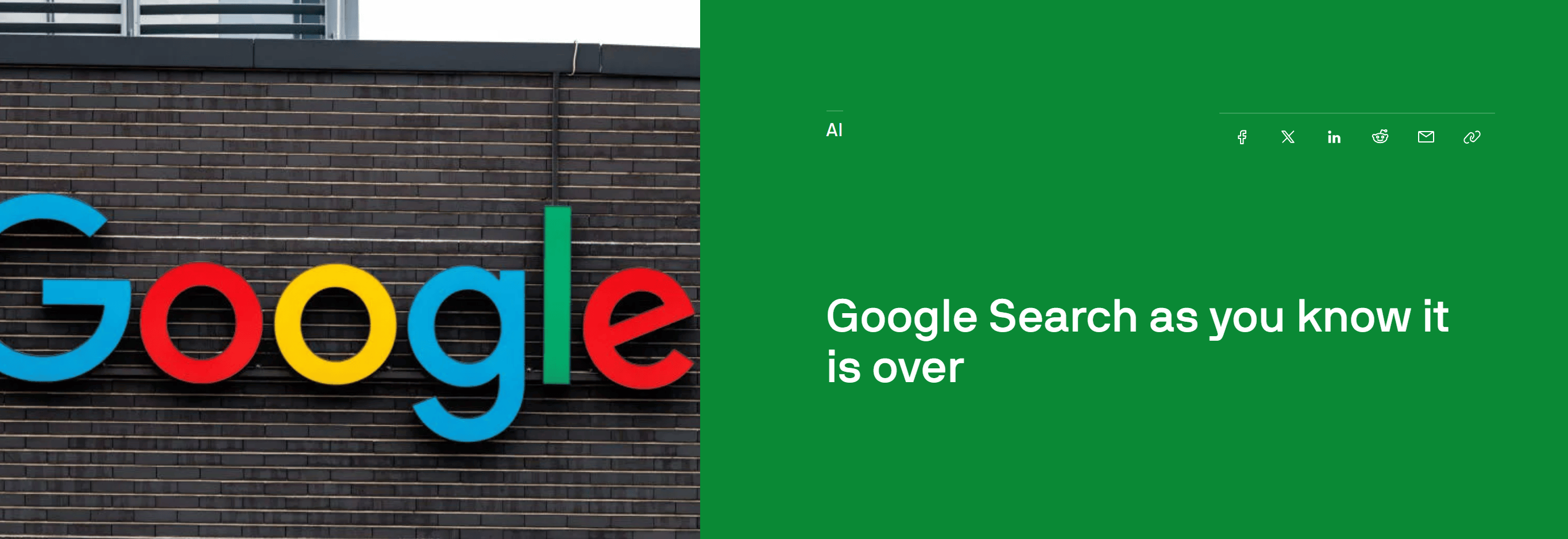
It opens with:
“The era of the “ten blue links” is officially over.”
But if you read past that line (and most people don’t), the same article clarifies later:
“The links, to clarify, have not entirely disappeared; they are just no longer the priority for many types of searches.”
There’s plenty of speculation about what Google’s I/O announcements mean for search and with even more AI being woven in, the obvious question is: are we headed for another traffic drop?
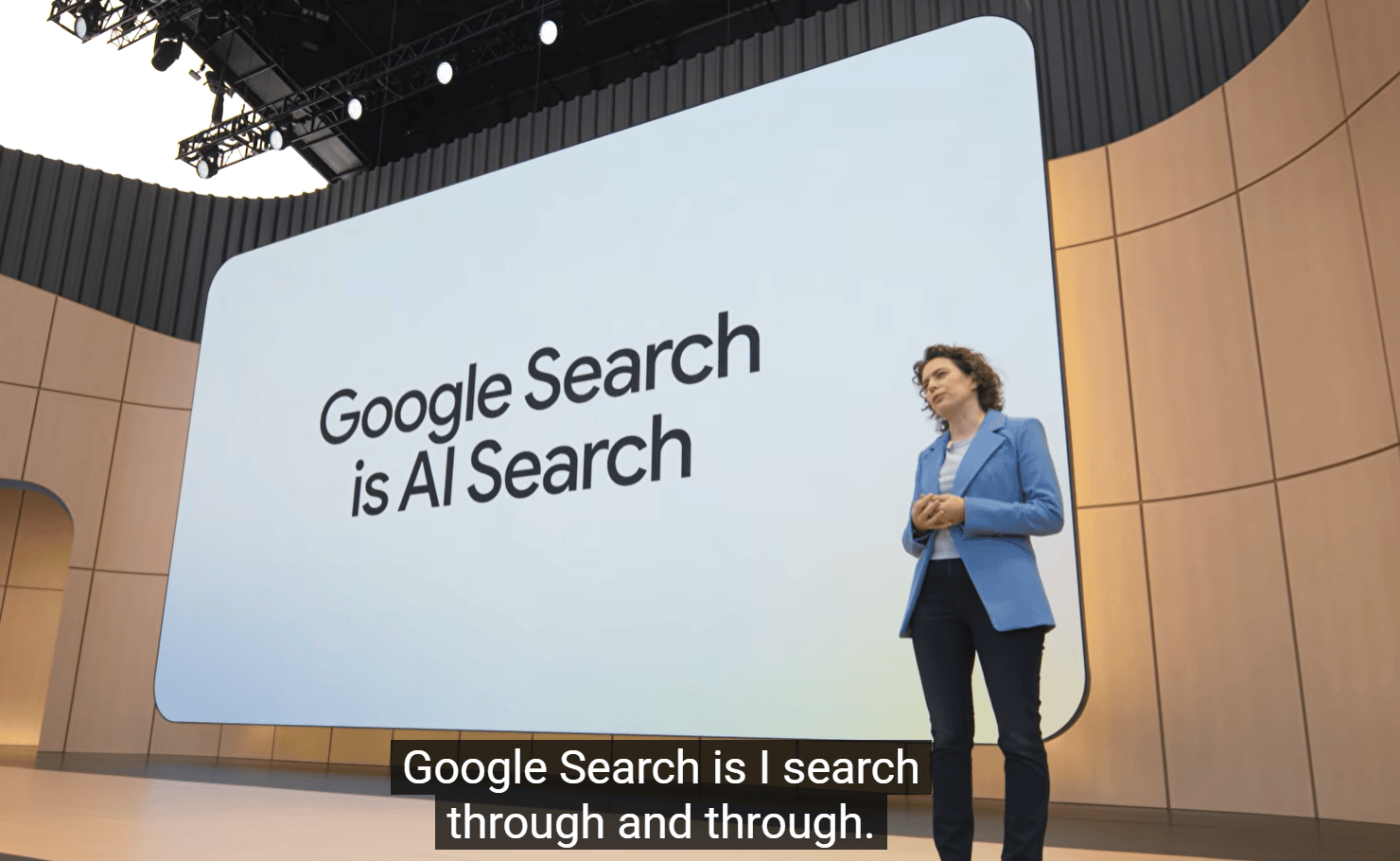
AI search has become the synonymous to “less traffic to publishers”, so when Google’s VP of search, Liz Reid declares that ‘Google search is AI search, through and through,’ it’s not exactly great news 😆
So what are we going to do?
As of now, everything is still in the air, a lot of the AI features Google announced will be pushed to search later this summer, and as I will discuss below, they may not cause the apocalypse everyone is expecting. This much I know. Of course I can be wrong, but hear me out.
I also know that the web echosystem relies on publishers creating good content, if publishers cannot properly measure, let alone see the ROI of their work, the system will collapse, so whatever is happening in search, Google will have no option but to find ways to support publishers and compensate them.
Enter features like Preferred Sources, which just rolled out to all publishers after being limited to news outlets only. It's the shortcut no one expected! A way to get more visibility in search and across Google's AI surfaces.
If you're not familiar with it, it's a feature that lets people "follow" specific websites, so those sites appear more in their search results. [learn more here]
So what’s happening to search?
The Search Box
Google just launched their biggest upgrade to their search box ever. It anticipates your intent and helps you formulate your questions better that go beyond autocomplete.
What this means for SEO?
We will be seeing more and more long tail queries in GSC. Our traditional keyword research processes and optimizations will need to adapt accordingly.
It’s not going to be just simple keywords like “best SEO newsletters”, there will be more details attached like “best SEO newsletters for someone starting in SEO with no technical background” for example.
With more specific searches like this, your content will need to be more specific as well. But in a way, this has always been the case, over 70% of traffic on the web already comes from long tail keywords [source]. The queries are just going to get even more specific.
Additionally being more detailed and specific in your content has always been a thing, after all 94.74% of keywords have monthly search volumes of 10 or less [source]
Search Agents 🧐
Did you ever use Google alerts?
Well one of the features Google announced was search agents that keeps you up-to-date on whatever you need.
For example, if you’re apartment hunting, the new search agents feature can keep scanning the web for you and notifies you once there’s a new listing that fits your specific needs.
Ya… google alerts with more fine tuning features… one you might actually use 😆
What this means for SEO?
Agents will be searching on behalf of humans, LLMs do that at the moment in a way. Is your website agents ready?
Turns out adding an LLM.txt, markdown and schema may come in handy now right?
If your website has tools that agents maybe using, things like WebMCP protocol that Google quietly announced that didn't get nearly the attention it deserved maybe core to your web strategy. It now all makes perfect sense. It’s another piece of the agentic web puzzle.
The question is are we ready AI agents using your website on behalf of users?
Agentic coding in Search
You know when you want to teach a child something and you start by drawing it for them?
Search is about to do that.
Google announced that search results will be able to generate interactive, visual experiences on the fly. Not static diagrams, but actual tools you can play with.
For example,
ask how mixing red and yellow works, and instead of a text explanation of how they create the color orange, you get sliders to adjust the composition yourself and watch the color change in real time.
What this means for SEO?
I really don’t know. But I can make some guesses:
People will have higher expectations from educational content. A lame block of text may not cut it anymore. If you're teaching something, you'll need to go deeper, or offer something the demo can't.
A lot of learning will happen in search. I don’t think this is great news given we know the limitations of LLMs and how they hallucinate, a side of effect of their design.
Another drop in traffic to educational websites. Sorry, but not great news.
The Mini Apps & New Content Mindset
One thing the I/O blog mentioned that I find super interesting, is “But often, you aren’t asking one-off questions — you have an ongoing task you find yourself searching for over and over”
With the agentic capabilities coming to search, you will be able to create dashboards to track your progress on specific tasks. Like building a fitness tracker for your daily workout plans and meals.
“You can think of these like mini apps for your own specific tasks.”
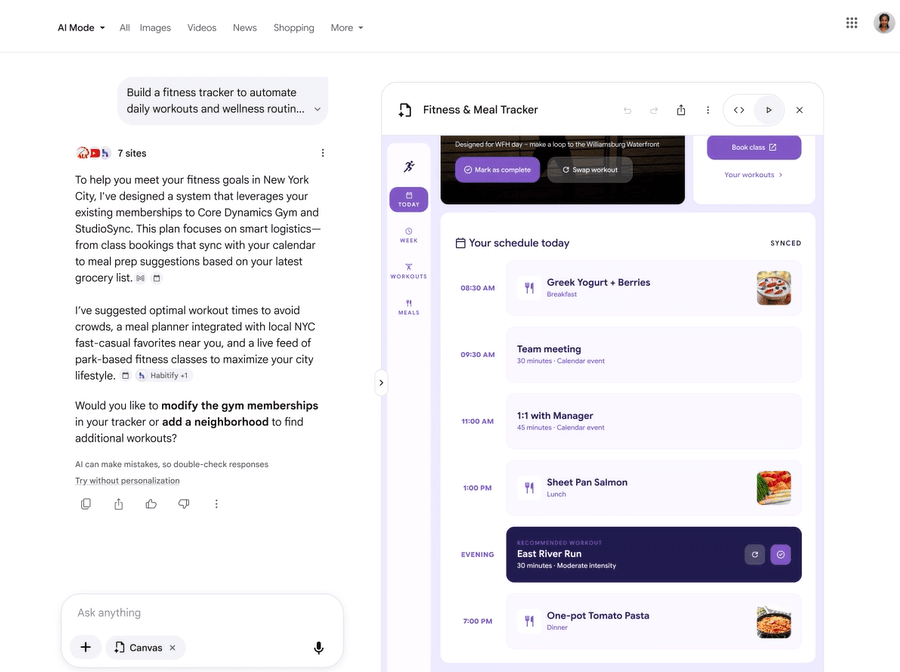
But this feature will be only available at first to Google AI Pro and Ultra subscribers in the U.S.
What this means for SEO?
I know this may come off surprising, but this is the part I liked the most about the I/O announcements. It just gave us a major hint how we should be creating content.
Think of the task the user is trying to achieve that this one search is one part of, look for the bigger picture not just the exact searches and their intent.
Old thinking:
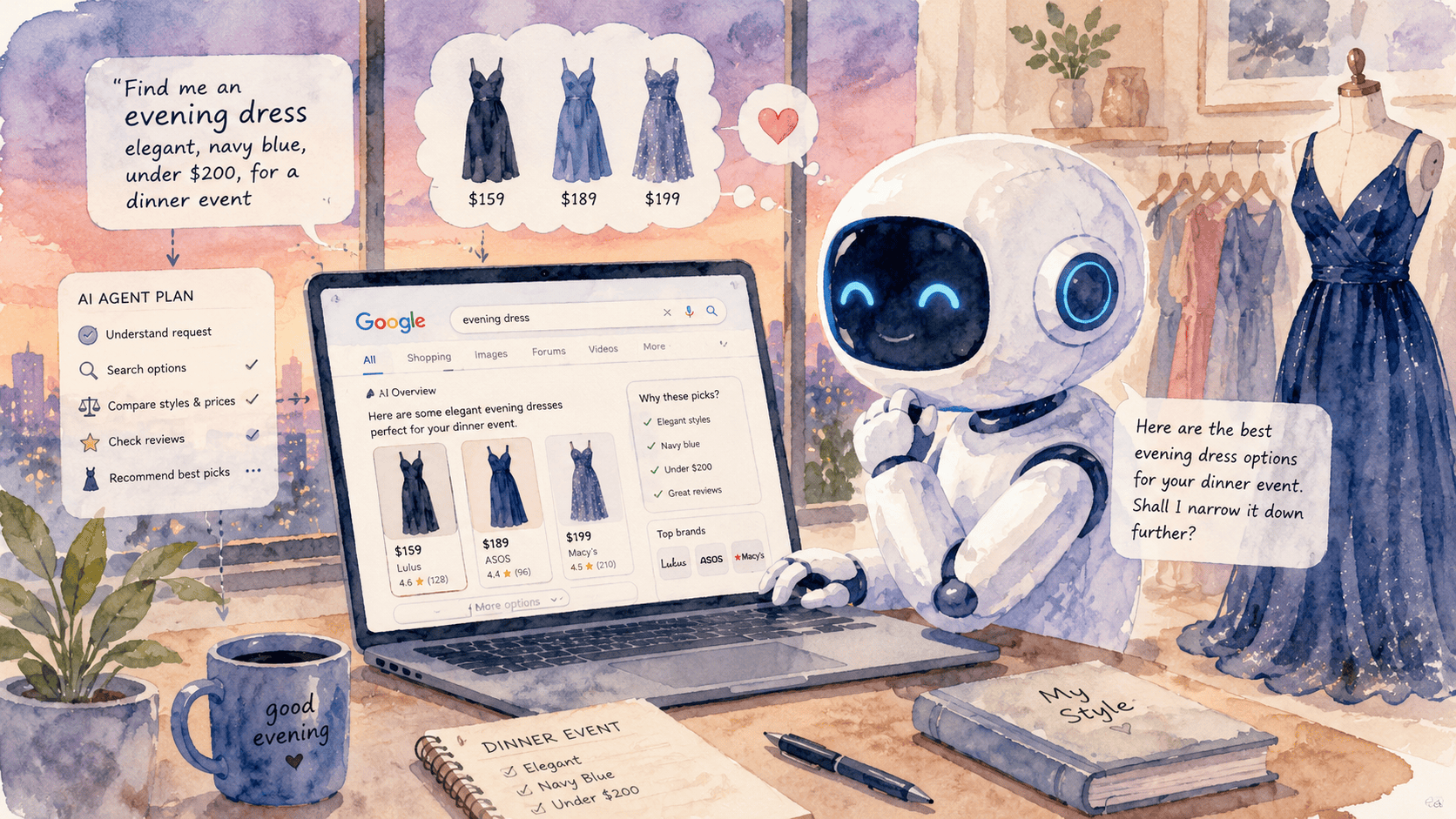
You sell evening dresses, you optimize your content as follows:
evening dresses product category page
individual evening dresses page
blogs about evening dresses (e.g what dresses are most slimming, and how much should you spend on an evening dress, etc..)
New thinking:
You sell evening dresses, you optimize your content as follows:
You ask “why is a customer looking to buy an evening dress”
They have a date
They are attending a wedding
They just got invited to a black tie event and have no idea what to wear
From there, you build content around those bigger goals, the date, the wedding, the event, not just the dress. Some of the information will naturally overlap with what you’re already creating, but the structure shifts from “what are people searching for” to “what are people trying to accomplish.” Think of it as zooming out from the search to the task behind it.
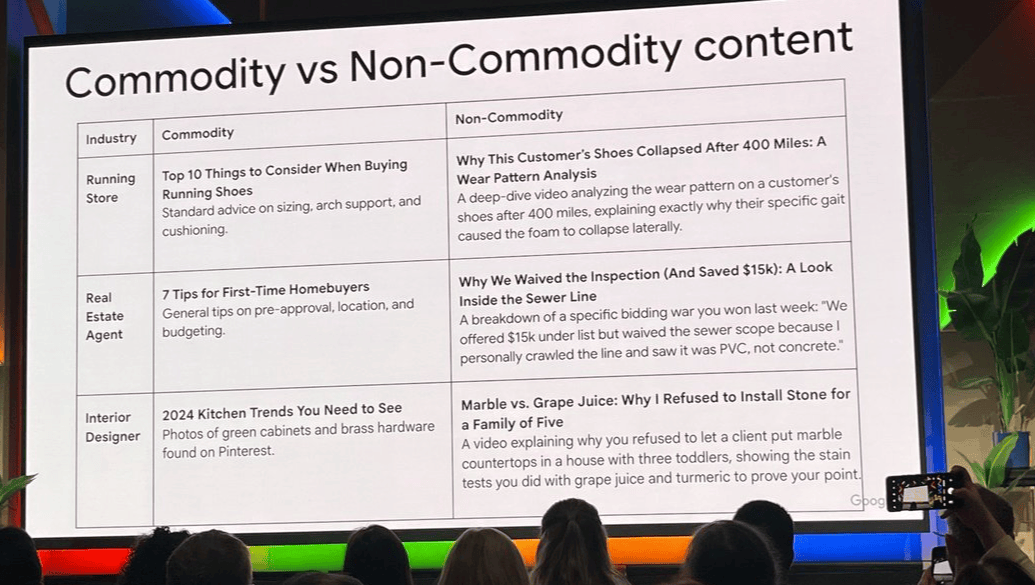
Psst… his overlaps nicely with the commodity vs. non-commodity content framework from the Google search central live event. The content that survives is the content that serves a purpose no widget or AI snippet can replicate.
And That’s a Wrap (Almost 😄)
I’ll be honest, I’m excited about what’s coming, even if it’s a challenge. SEO has survived every major evolution so far, and I don’t think this one will be any different.
And did you notice how everything connects? Preferred Sources, search agents, WebMCP, agentic coding, mini apps, etc.. it’s all pointing in the same direction. The web is getting more agentic, and the SEOs who adapt their thinking early will be just fine.
That’s that for today folks and see you next newsletter 👋
Support the Riddler!
Sign up for my newsletter if you’re not already.
Share the newsletter and invite your friends to signup. Help me reach 2k signups by end of 2025 please 🙂
Provide feedback on how I can make this newsletter better!!!
If you’re an SEO tool or an SEO service provider, consider sponsoring my newsletter. I’m also open to other partnership ideas as well.
Disclaimer: LLMs were used to assist in wording and phrasing this blog.