

Hello Riddlers!
📌 If you find value in my newsletter and want to support the work that goes into it consider —> [☕Buy Me a Coffee☕]💡 Want more from me? [SEO Strategy Course] | [Build Your Own SEO Tools (with Python & Agentic AI)] | [Premium SEO Mastermind]
Alternatively you can become a paid subscriber
Intro
Everyone seems to be angry at Google right now. Just yesterday, I came across the latest piece from The New York Times titled “Google Is Building an A.I. Fence Around the Internet It Once Championed.”
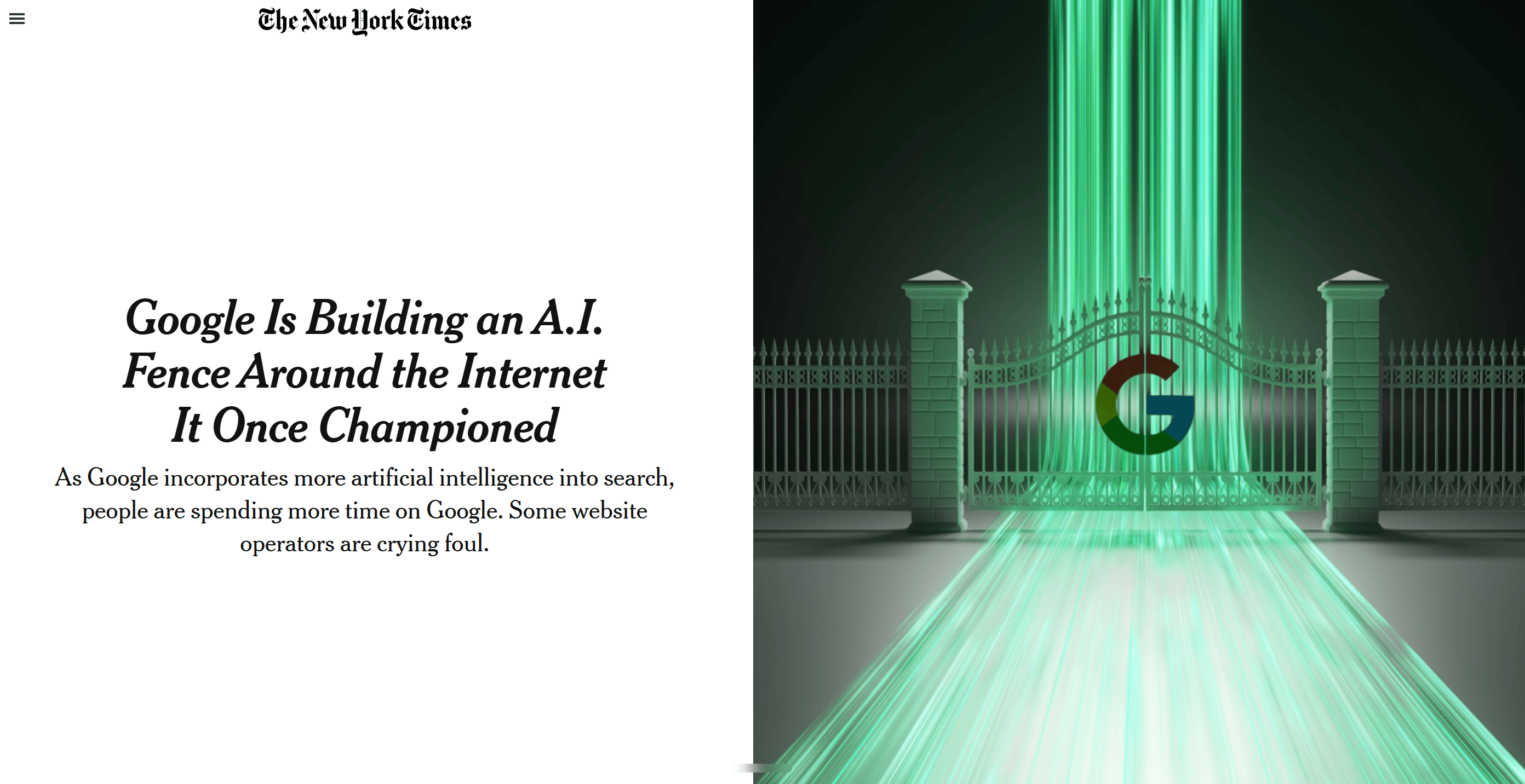
And, of course, even before this article was released, we had already heard statements from Google representatives emphasizing that Google continues to send significant amounts of traffic to the web. (yes Google we believe you 😂 and that’s exactly why you don’t want to show us the proof in GSC 😂)
Just last Friday, Google’s Head of Search, Nick Fox, wrote on LinkedIn that Google is “sending billions of clicks to websites every week through AI features in Search alone.” He added that these AI features were designed with this goal in mind: “We’ve designed our AI features in Search to connect people to websites.” Overall, he stated that Google “continues to send billions of clicks to the web every day through Search” and that people are using Google Search “more than ever.”
Similarly, last year, Google Search VP Liz Reid said that Search was still sending a “relatively stable” number of clicks—again, in the billions—and argued that reports showing declining search traffic relied on flawed methodologies.
The interesting part is that the conversation is no longer just about how many clicks Google sends. A billion clicks can be a very reassuring number until you start asking for the missing clicks data in GSC.
Well, in this sea of pessimism, I might actually have something potentially good news for ecommerce websites.
So buckle up!
First they came for the clicks, now they’re coming for the conversions
Publishers are upset because Google is taking away clicks from their websites, clicks they earned by creating great content and playing by the rules, clicks they need to generate ad revenue.
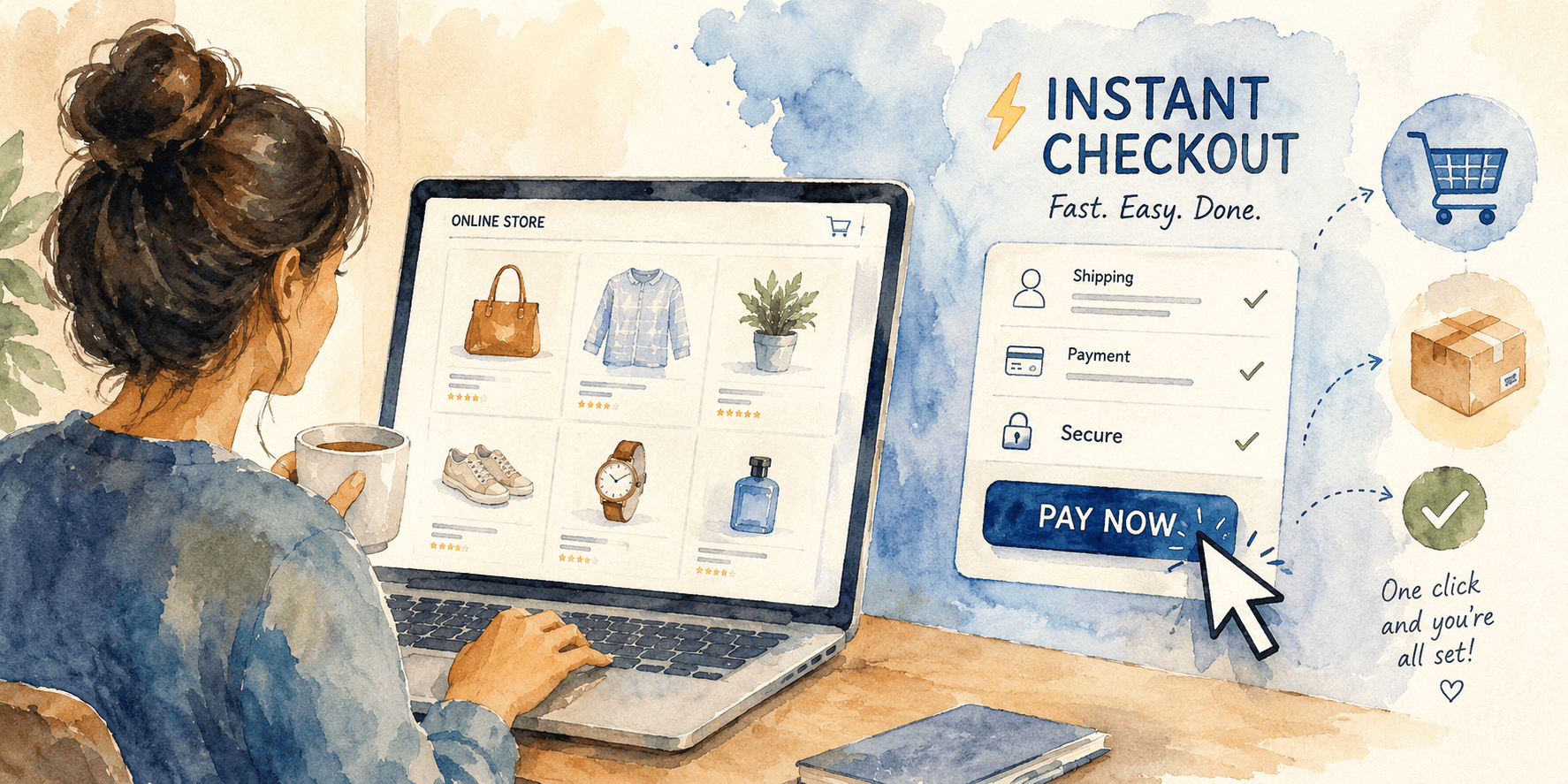
Ecommerce businesses, on the other hand, may have different concerns: how their products get recommended across AI surfaces and Google’s recent efforts to capture purchase clicks by offering users the ability to complete checkout directly within Search.
Just last year, ChatGPT announced that users could buy directly from U.S. Etsy sellers within chat. And in January, Google announced tools through the Universal Commerce Protocol that allow shoppers to complete purchases directly within AI Mode and the Gemini app.
I can imagine many concerns around this. One of them is that when people purchase directly from your website, they may discover other products they weren’t originally looking for and add them to their cart. Moving the purchase experience to a third-party platform — whether ChatGPT, Gemini, or AI Mode — gives merchants less control over the overall shopping experience.
For many retailers, this could be a significant challenge. The traditional ecommerce experience allows brands to cross-promote products, recommend complementary items, and encourage customers to explore more of their catalog. In a third-party checkout experience, products may be listed and purchased individually, without the same opportunities or control to guide customers toward other items or offers from the same seller.
This could also be seen as another example of what the New York Times article I shared earlier described: “Tech companies have built empires that locked users in and were focused on maximizing profit instead of enhancing public utility.”
So, as you can see, the concern has evolved. First, they came for the clicks. Now, they’re moving toward controlling the conversions by keeping users within their own platforms which raises an important question: how much control will merchants have over the customer journey in the future that Google and other platforms are building?
I can hear you saying… Sara, where’s the Good news you promised?
Quick historical analysis
I’ve been digging into the history of innovation in ecommerce trying to find patterns for an innovation strategy. Here’s one thing I noticed and I’m sure glad I did:
Does anyone remember Pinterest’s “Buyable Pins”?
Pinterest originally launched in-app purchasing through “Buyable Pins” in July 2015. However, the feature was officially retired globally in October 2018. Instead of keeping purchases within the platform, Pinterest shifted toward Product Pins, which redirect users to the retailer’s website to complete their purchase.
Then there was “Checkout on Instagram.”
Instagram launched its in-app checkout feature in March 2019, allowing users to complete purchases without leaving the app. However, Meta retired the feature globally in April 2024, moving back toward product tags that send users to the retailer’s external ecommerce store to complete their purchases.
So historically, we have two examples of major tech companies attempting to own the checkout experience and both eventually moved away from it.
Why?
Because users don’t just want to buy a product; they want to experience the brand they are buying from. They want to understand shipping times and costs, learn the brand’s story, decide whether they trust the company, explore other products, discover promotions, and so much more.
If there’s one thing this history teaches us, it’s that when users have an established way of doing things on a platform - like shopping on the web- changing that behavior is incredibly difficult.
The better opportunity may not be replacing existing habits, but building solutions around them: reducing friction, improving discovery, and making the existing customer journey easier rather than trying to completely reinvent it.
If you’re an ecommerce website, congratulations it seems you are safe for now. Your focus should be on optimizing your platform for conversions, removing any friction and simply making every click to your website count!
And That’s a Wrap (Almost 😄)
History is not boring! It’s actually one of the most fascinating places to look for insights, if you’re open to learning from it.
There’s a lot of negative news circulating as we navigate this AI boom: layoffs, declining clicks, concerns about the future of the web, and even broader conversations around how technology is affecting the way we think.
But we shouldn’t simply give in, passively consume, and accept everything we read as fact… right?
Speaking of being “open to learning”…. that’s a much bigger discussion for another day. There’s so much I want to say about what it takes to build a better SEO industry.
Hopefully. 🙏
That’s that for today folks and see you in the next newsletter!
Support the Riddler!
Sign up for my newsletter if you’re not already.
Share the newsletter and invite your friends to signup. Help me reach 2k signups by end of 2025 please 🙂
Provide feedback on how I can make this newsletter better!!!
If you’re an SEO tool or an SEO service provider, consider sponsoring my newsletter. I’m also open to other partnership ideas as well.
Disclaimer: LLMs were used to assist in wording and phrasing this blog.